
High-Volatility Slots in the UK: Session Guide
 Available in GB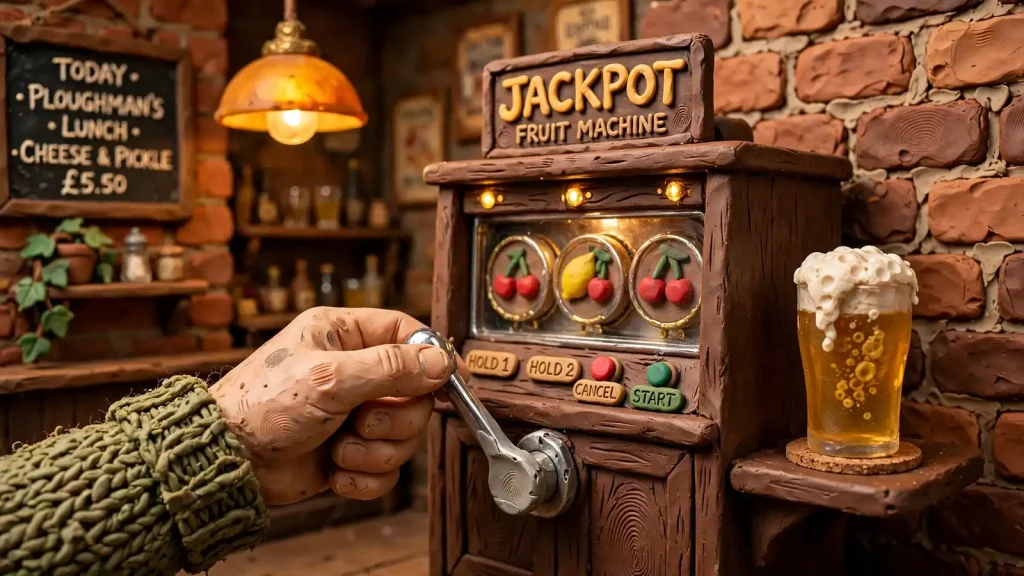
Volatility describes a broad pattern of outcomes, not what the next spin will do or whether a larger payout will arrive.
How Slot Volatility Shapes a Session
Volatility changes the rhythm of a slot session. A low-volatility game tends to deliver smaller wins more often, while a high-volatility game is more likely to leave longer gaps between wins, with larger payouts possible when one arrives. That difference can shape how a session feels, even though it cannot tell you what the next spin will do.
With a lower-volatility slot, you may see your balance move in smaller steps. That can make play feel steadier, but it does not mean every spin wins or that your balance cannot fall. High-volatility slots can feel less predictable: a stretch without a notable return may be followed by a bigger win, or it may simply continue without one. The possible swings are part of the format, not a promise that patience will be rewarded.
I’d think about the session before choosing. If you want frequent signs of activity, a high-volatility game may feel frustrating. If you’re comfortable with quieter stretches and accept that a larger payout may never arrive, its pattern may suit you better. Neither style makes a session reliable. Volatility describes a broad pattern of outcomes, not a schedule you can use to time a win.
That distinction matters when you decide how much to stake and how long to play. A high-volatility slot can use up a budget quickly if you keep raising stakes to make a quiet run feel worthwhile. I’ve found that the simplest safeguard is to decide your limit while you’re calm, then leave it alone. Don’t treat a losing stretch as evidence that a win is “due”; each new spin remains uncertain.
The British setting
For online play, the rules around the casino matter as much as the game’s feel. The UK Gambling Commission oversees commercial gambling in Great Britain and regulates remote gambling offered to consumers there, even when the operator’s key equipment is based elsewhere. It is the sole regulator for commercial gambling in Great Britain. The Commission grants operating licences to businesses and personal licences to individuals working in the industry.
RTP Casino Slots in the UK: Understanding Returns
A licence is more than a badge in a footer. It places an operator within the local regulatory system, where its permission to offer gambling is tied to regulatory requirements. Before depositing, I would check the operator’s licence details against the Commission’s public register rather than relying only on a logo or a claim on a homepage. A familiar-looking site is not proof of a current licence.
Stake limits also shape the session. A specialist review reports that the maximum online-slot stake in Great Britain is £5 per game cycle for customers aged 25 and over, and £2 for those aged 18 to 24. Treat that as a regulatory detail to verify against current official guidance before you play, rather than assuming every casino page you read is up to date. The age bands matter: the permitted ceiling is not the same for every adult player.
These limits apply to online slots, not to every casino game. So if you move between slots and table games, don’t assume that a rule described for one category automatically covers another. Check the relevant terms and rules for the game you are opening.
There is no special “high-volatility” licence that makes a game safer or more favourable. The label concerns the game’s pattern of returns; the operator’s licence concerns whether it is authorised to offer gambling to consumers in the relevant market. Keep those two questions separate. One is about what play may feel like, the other about who is permitted to provide it.
In practical terms, choose a stake that remains comfortable through an unexciting run, not one that only seems manageable if a win appears soon. A quieter session is not a signal to increase your bet, and a dramatic one is not proof that the next session will behave the same way. Set the boundary first. Then stick to it.
Stake Limits
In Great Britain, the maximum online-slot stake is £5 per game cycle for customers aged 25 and over, and £2 for those aged 18 to 24.
What a High-Volatility Slot Machine Can Look Like
A high-volatility slot machine does not have a special shape or a distinct layout you can spot at a glance. On screen, it may look much like any other slot: reels, symbols, a spin button and controls for setting your stake. The difference is not necessarily in the artwork. It is in how the game’s results are distributed over time, something the layout alone cannot show you.
It helps to separate the machine’s visible structure from the way its bets work. A reel is the vertical strip where symbols appear; a payline is a pattern across the reels that may count as a winning combination. But the screen does not always explain the bet clearly at first glance. Before you spin, check whether the stake shown is the total for the game cycle or an amount applied to each selected line. Those are not interchangeable, and a small-looking control can be easy to misread.
How a bet can cover the reels
On a 5 reel slot game, your stake may be set so that it applies across all five reels, rather than being a separate amount you choose for each one. The game’s controls should show what the selected stake covers. Take a moment to read them before starting; guessing from the button labels is a poor way to learn what you have committed.
Casino Games in the UK: Slots, Live Games and More
Some games present the stake as a single total. Others may let you adjust settings that affect how the stake is distributed across lines or other parts of the game. The details vary, so the useful question is not simply “What is my bet?” but “What does this displayed bet include?” If the controls are unclear, open the game information or help panel rather than testing it with a spin.
The reels are a visual arrangement, not a promise that every symbol position is equally likely or that every visible pattern has the same value. Symbols line up on the screen according to the game’s rules, and only combinations recognised by those rules count. A pattern that looks close to a win may not qualify; a symbol’s position, the direction in which a combination must run, or the line selected can matter. Read the paytable before play, especially if the game offers more than one way to set a stake.
What the screen can—and cannot—tell you
A busy screen can make a slot look complicated, while a plain one can conceal a game with a less predictable pattern of returns. Neither impression tells you the volatility. Reels, paylines, symbol designs and animations describe how the game is presented and how a spin is displayed. They do not, by themselves, establish how often wins arrive or how large they may be.
That is why I would not use the words “high volatility” as a visual category. You cannot reliably identify slot machines with high volatility by counting their reels or judging how dramatic the graphics look. Two games can share a familiar reel layout yet feel quite different in play. The label is about the pattern of outcomes, not a promise that a particular screen element will signal a big result.
Before You Spin
- Check the total stake shown
- Confirm what that stake applies to
- Read the paytable and winning combination rules
- Verify the game information or help panel
The same caution applies to a list of high-volatility slot machines. A list of titles, without clear information about each game’s volatility, does little to explain what you are choosing. If you are looking at a particular slot, check its own information and paytable, then treat its layout as a guide to the rules rather than as proof of how the session will go. A jackpot symbol, a large-looking multiplier or a dramatic sound effect may attract attention, but presentation alone does not tell you the likely rhythm of results.
A quick check before you spin
I look at the controls in this order: first, the total stake shown; next, what that stake applies to; then the paytable and the rules for a winning combination. That simple check helps separate the mechanics from the mood of the game. It also makes it easier to notice when changing a setting changes the total amount wagered.
If the game shows several selectable lines, do not assume that every line is active or that the displayed stake means the same thing across different titles. Confirm the setting on the screen. A five-reel layout can still handle the stake as one amount covering its full width; the exact controls depend on the game.
So what does a high-volatility slot machine look like? Often, it looks like a slot machine. Its appearance may be familiar, but the label describes the way its results are spread out, not the shape of its reels. Learn the bet controls first; then decide whether the game’s stated characteristics suit the sort of session you want. The graphics can wait.
High-RTP Slots in the UK: What RTP Can Tell You
Reading the Features of High-Volatility Slot Games
A feature can make a slot feel dramatic, but it does not tell you by itself how volatile the game is. The useful question is how the feature shapes the way prizes are delivered: does it provide frequent, modest additions, or make a larger part of the possible result depend on a less common event?
That distinction matters when you browse high-volatility slot games. A bonus round, wild symbol or multiplier is not a volatility label. The same feature can behave differently from one game to another, depending on its rules and how prizes are distributed. Read the paytable and the feature description together rather than treating a colourful animation as evidence of a particular play style.
What features can change
Wild symbols can substitute for other symbols, helping to complete a winning combination. Some games may let them expand, move or remain in place during a feature; others use a simpler version. The effect depends on the game’s rules. A wild may contribute to ordinary play, or it may matter most during a bonus. Its presence alone does not show whether a game is high volatility.
Scatter symbols often act as a gateway to a bonus round or free spins. Check what the game says happens when they appear, and whether the feature can produce different kinds of outcomes. A bonus with several possible results may feel less predictable than one that adds a small, steady amount to a win. That is a clue to how the feature is designed, not a promise about what you will receive.
Wild Symbols
These can substitute for other symbols to help complete winning combinations and may have different behaviors depending on the game rules.
Scatter Symbols
These often act as a gateway to bonus rounds or free spins, providing different kinds of outcomes.
Multipliers
These increase a prize, but their impact depends on whether they apply to accumulated wins or a single result.
Multipliers need the same careful reading. A multiplier can increase a prize already earned, but its practical impact depends on what it applies to and when. A feature that multiplies accumulated wins works differently from one where a multiplier is attached to a single result. Look for those details in the rules; the word “multiplier” on its own says very little.
Some games also have feature choices, hold-and-spin rounds, expanding symbols or jackpots. These can create a sense that a particular event is the main attraction. But a dramatic feature is not automatically a high-volatility one, and a jackpot label does not tell you whether the prize is fixed or progressive. The paytable and game information are more useful than the artwork.
Contrast, not a template
Low-volatility slots provide a useful point of comparison, but their familiar design traits are not a checklist for every other game. They typically use five reels and at least twenty-five paylines, with fixed jackpot amounts rather than progressive pools. Their bonus rounds may multiply wins that have already built up. Those features fit a design in which smaller returns are spread across play.
A high-volatility game need not simply reverse each of those choices. It may use a similar reel layout, a fixed prize, or a multiplier bonus and still distribute its outcomes differently. Conversely, adding a progressive jackpot or a flashy bonus does not establish that a game is high volatility. Features are parts of the design; volatility describes the overall pattern of outcomes.
Video Slots in the UK: Reels, Games and Bonuses
When you inspect a game, notice whether its bonus is presented as a frequent extension of ordinary play or as a distinct event with a wider range of possible results. Then check how the rules describe the prizes within it. The aim is not to guess the outcome of your next spin. It is to understand what kind of feature you are entering and what it can do.
Read the rules before the animation
Game screens are good at showing excitement and less good at explaining the fine print. The paytable usually gives a clearer account of symbol values and feature conditions. Look for whether a bonus requires particular symbols, whether a wild has a special role, and what a multiplier actually affects. If jackpot prizes are mentioned, check whether the game describes them as fixed or progressive.
I also pay attention to what the game does not make clear at first glance. A feature name can sound decisive while leaving its rules to a separate information panel. Open that panel before committing to a real-money game. It is a small pause, and a more useful one than trying to infer the rules from the animation.
For anyone comparing the best high-volatility slot games, the same approach applies: compare how features are structured, not just how impressive they look. A title’s volatility label, where provided, is more relevant than a single symbol or bonus. The feature details then help you understand the experience the game is designed to offer.
Understanding Features
- A feature is not a volatility label in itself.
- The same feature can behave differently across different games.
- Read the paytable and rules rather than relying on animations.
There is no universal high-volatility feature set. Some games lean on a bonus round; others may make a jackpot or special symbol central to their design. Treat each game as its own set of rules. Flashy is not a category.
What High Volatility Means for Your Returns
Volatility describes the pattern of a slot’s returns: how often wins tend to arrive and how large they may be. A high-volatility game tends to produce wins less frequently, with the possibility of larger payouts. A low-volatility game tends to spread returns across more frequent, smaller wins. It is about the shape of the ride, not a promise about what you will get back.
That distinction matters when you look at a short run of spins. A low-volatility slot may show several small wins, which can make the balance seem active. A high-volatility slot may go longer without a win, then produce a larger one. Neither pattern tells you what will happen next, and a few small returns do not prove that a game is more generous overall.
Low-volatility games are commonly described as producing a winning combination every three to six spins on average across most titles. Treat that as a broad description, not a timetable for your session. A game does not owe you a win because several spins have passed, and the average does not mean each player will see that rhythm. The next result remains uncertain.
3-Reel Slots in the UK: How the Format Works
Frequency is not the same as value
It is easy to count wins and assume the game with more of them must be better. But frequency alone leaves out their size. Many small payouts can feel reassuring while returning only part of what you have staked; a rarer, larger payout can feel dramatic without guaranteeing a better result over time.
For instance, a winning spin is not necessarily a profit-making spin. If the payout is smaller than the stake used for that spin, your balance can still fall. What matters to your overall result is the money wagered and the money returned, not simply how often the reels show a winning combination.
Volatility also does not tell you whether a particular session will end ahead. It describes tendencies across play, not a personal forecast. A high-volatility game can give you a small win early, while a low-volatility game can have a quiet patch. Labels are useful for understanding the usual distribution of results; they cannot schedule them.
The same point applies when you see “very high volatility” in a game description. It signals a stronger tendency towards infrequent wins and larger potential payouts than a milder profile, not a guarantee of a large prize. If you are trying to understand the label, look for the game’s own information or help panel where volatility is stated. If it is not disclosed, there is no reliable way to infer an exact profile from a theme or a feature name alone.
Do
- Use volatility as a guide to the pattern of wins.
- Check the game’s own information or help panel.
- Set a spending limit while you are calm.
Don’t
- Treat a losing stretch as evidence a win is due.
- Use the volatility label to predict your next result.
- Assume a flashy animation signals a big payout.
What the label cannot tell you
Volatility is not the same as a game’s long-term mathematical return. The first concerns how results are distributed; the second concerns the relationship between stakes and payouts over extended play. A run of frequent small wins can still leave a player down, just as a rare large result does not erase the uncertainty of what comes before it.
Where a game has a house edge, its mathematical expectation is negative over a sufficiently long span of play. That remains true whether losses arrive gradually through small shortfalls or are felt after longer gaps between wins. A busier-looking balance is not evidence that the underlying odds have changed.
So, is high volatility good or bad in slots? The label itself is neither. It describes a style of results, not a quality rating. If you are browsing real money slots online in the UK, check whether the game information gives a volatility description, then read it as a guide to the pattern of wins rather than a prediction of your own returns. The distinction is simple. The outcome is not.
High or Low Volatility: Which Fits Your Play?
The choice comes down to what you want a session to feel like. Low-volatility slots spread returns across more frequent, smaller wins. High-volatility slots tend to pay less often, with larger wins when they do. Neither style is automatically better; they suit different expectations.
Online Slot Payout Percentages: RTP Explained
If you prefer regular signs of activity, the low-volatility side may feel more comfortable. Smaller wins can make a session seem less stop-start, though they do not mean every spin will pay or that your balance is protected. The appeal is the rhythm: returns are spread out rather than concentrated in occasional larger payouts.
A high-volatility slot is a different sort of wait. You may see fewer wins, and the possibility of a larger payout is part of the appeal. That can suit someone who accepts quieter stretches in exchange for the chance of a more substantial result. It may feel frustrating if you expect frequent wins to keep the session moving.
I would start with the experience you actually want, not with a promise of what a game might pay. If a long run without a win would make you uncomfortable, choosing a high-volatility game just because its possible wins sound attractive is a poor fit. If small, frequent returns feel unsatisfying, low volatility may not give you the kind of session you are looking for.
When people ask whether high or low volatility is better for slots, there is no universal answer. The better match depends on whether you value more frequent smaller returns or would rather accept less frequent wins for the possibility of larger ones. That preference is personal; it does not make either style a safer or more reliable way to play.
The phrase “best high-volatility slot” can also lead you in the wrong direction if you treat it as a guarantee of a better outcome. A label describes a broad style, not what will happen in your session. Choose based on the pace and uncertainty you can accept, then judge the experience on those terms.
Volatility Comparison
Low-volatility slots typically involve more frequent, smaller wins, while high-volatility slots involve less frequent, potentially larger payouts.
Keep the comparison simple: frequent smaller wins point towards low volatility; less frequent, potentially larger wins point towards high volatility. Neither choice needs to be justified by a supposed winning system. Pick the style that matches your expectations, and be ready for the actual session to vary. That is the trade-off.
Choosing a Volatility Level Without Chasing Losses
There is no volatility setting that turns a slot into a better bet. The useful question is whether the game’s pattern of results fits the session you actually want. If you want play that feels less stop-start, a lower-volatility choice may be more comfortable. If you are willing to accept longer stretches without a return in exchange for the possibility of a larger one, higher volatility may fit your expectations. Neither is a reliable way to make money.
I’d decide before opening the game, not after a run of disappointing spins. Set a spending limit you can afford to lose, and treat it as the cost of the session. If the money is gone, stop. Changing to a more volatile slot because you want to recover it is still chasing losses; the new game does not owe you a win.
The same applies in reverse. A run of small returns can make a lower-volatility slot feel reassuring, but that feeling is not evidence that the game has become more generous. A positive house edge means the mathematical expectation is negative over enough sessions, whether losses arrive gradually or in sharper swings. Volatility affects the shape of the experience, not that underlying expectation.
First Deposit Bonus Casinos in the UK: What to Check
Before you play, be honest about what would spoil the session. If a long dry spell would tempt you to raise your stake or keep going past your limit, a high-volatility game may be a poor fit. If frequent small returns would leave you feeling that the game is dull, a lower-volatility one may not hold your interest either. There is no virtue in choosing the style that sounds more exciting.
I also keep the decision separate from the result. A win does not prove the choice was sensible, and a losing session does not mean I should switch styles and try again. The point is to choose a level of variation you can tolerate, then stick to the limits you set.
So, is high volatility good or bad? It is neither on its own. It can suit someone who accepts uneven results; low volatility may suit someone who prefers a steadier-feeling session. Neither changes the house edge, and neither should be used as a plan to win back losses. Set the boundary first. Then leave it there.
A Plain-English Definition of a High-Volatility Slot
A high-volatility slot is a game where wins tend to arrive less often, but can be larger when they do. The label describes the pattern of payouts, not a promise about what will happen in your next spin or session.
In practical terms, you may play through a stretch without a return, then see a win that is bigger than the small, frequent prizes associated with a lower-volatility game. That is the basic distinction. It does not mean every high-volatility slot behaves identically, or that a larger win is due after a quiet run.
High Volatility
A pattern of outcomes where wins tend to arrive less frequently, but have the potential to be larger when they do occur.
I treat volatility as a description, not a quality mark. “High” does not mean the game is better, more exciting for everyone, or more likely to pay you overall. It tells you something about how returns are distributed: less frequently, in larger amounts. The actual experience can still vary from session to session.
When you see the term in a UK casino, read it as a guide to the game’s payout character. It is useful when deciding whether the style sounds comfortable for you, but it cannot forecast your result. A slot’s label does not change the stake you choose or turn a losing run into a winning one.
The phrase can also be confused with a promise of a big jackpot. It is not one. A high-volatility game may have the potential for less frequent, larger payouts, but the label by itself tells you neither the size of a particular prize nor when one might appear. Keep those ideas separate.
So, in plain English: expect fewer wins, with the possibility of larger ones, rather than a steady flow of small returns. If that pattern would make a session feel frustrating, the label is worth noticing before you play. If it suits your expectations, remember that it remains a description of the game, not a prediction. Dry, but useful.
Online Keno Casinos in the UK: How to Choose
Bonuses and High-Volatility Play: Check the Clock
A bonus and a high-volatility slot bring two separate uncertainties: the game’s results and the offer’s conditions. The bonus does not soften the game’s swings, and choosing a high-volatility slot is not a way to make an offer last longer or become more valuable. I’d check the terms before opting in, rather than treating the bonus balance as extra time to play.
Start with the expiry wording. Find out when the clock begins, what counts as using the bonus, and when any remaining bonus funds or winnings are removed. One specialist review reports a 48-hour lifespan for bonuses as typical; that is a report, not a rule you can assume applies to every offer. The operator’s own terms are what matter for the bonus in front of you.
Then check the playthrough conditions. Look for which games qualify, whether slots contribute differently from other games, and whether there are restrictions on bets while bonus funds are active. These details can change how much of the offer you can use before it expires. If the terms are unclear, ask the operator before accepting; once you have opted in, a deadline can make an ordinary session feel rushed.
That pressure is worth noticing. High-volatility play can involve longer stretches without a return, while a bonus may have a limited window. If the two do not fit comfortably within the time and spending limit you set for yourself, declining the offer is a sensible choice. A bonus is optional, not a reason to extend a session or raise a stake.
Bonus Terms
Before opting in, find out when the expiry clock begins, what counts as using the bonus, and what the playthrough conditions are.
One specialist review reports a 48-hour lifespan for bonuses as typical, but you must check the operator’s specific terms.
I also read the cash-out conditions before depositing. Check what happens to winnings if you stop playing, whether the bonus must be completed first, and whether withdrawing cancels any part of it. Keep your own deposit separate in your thinking from promotional funds: neither changes the slot’s results, and neither makes losses due to be recovered.
A sound high-volatility casino bonus strategy in the UK is simply to understand the terms, decide whether the time window suits you, and walk away if it does not. No offer can remove the uncertainty built into the game. Short and clear beats rushed.
What to Check at a High-Volatility Casino in Britain
Before depositing, check who runs the casino and whether it holds a current UK Gambling Commission operating licence. The Commission’s public register lets you verify the operator’s status; do not rely on a logo or a claim on the casino’s own pages. Remote gambling businesses serving customers in Great Britain need the relevant licence, even if their equipment or company is based elsewhere.
There is a further practical check for online slots: the stake limit depends on your age. A specialist review reports a maximum stake of £5 per game cycle for customers aged 25 and over, and £2 for those aged 18 to 24. Treat that as a rule to confirm against current official guidance and the casino’s terms, since the limit is set by regulation and can change. The restriction concerns online slot play, not every casino game.
That matters when you choose a high-volatility slot. Its label does not alter the permitted stake, and a casino should not present a larger stake as an exception to the limit. Check the amount shown for each game cycle before you start, especially if the game’s controls make it easy to adjust the stake.
A licensed operator should also make its licence details easy to find. If the details are unclear, search the public register rather than taking the site’s word for it. Small check, worth doing.
The Difference Between High- and Low-Volatility Slots
The difference is mainly in how a game spreads its returns. Low-volatility slots tend to produce smaller wins more often. High-volatility slots tend to pay less frequently, with wins that can be larger. Neither label tells you what will happen on your next spin; it describes the broad pattern of a game’s payouts.
| Low volatility | High volatility |
|---|---|
| Smaller wins tend to arrive more often | Wins tend to arrive less often and may be larger |
| Returns are spread across more frequent payouts | Returns are concentrated in less frequent payouts |
That contrast can change the feel of a session. On a low-volatility game, you may see more regular winning combinations, though those wins can be modest. On a high-volatility game, a longer stretch without a win is more likely, while a payout may be more substantial when one lands. A large possible win is not a promise, and frequent small wins do not mean that a game will return more overall.
I find it useful to treat volatility as a description of payout rhythm, not a rating of quality. A lower-volatility slot is not automatically safer or more generous, and a higher-volatility slot is not automatically better for anyone hoping for a big result. The labels help set expectations about frequency and size; they do not predict the outcome of a particular session.
If you are comparing two games, look for their volatility information in the game rules or help screen, where available. Then read it alongside the paytable rather than relying on the label alone. The practical distinction is simple: low volatility leans towards smaller, more frequent wins; high volatility towards less frequent, potentially larger ones. That is the comparison in a nutshell.
Best casino sites in the UK
- ChanzeBonus: Slots Welcome Bonus #1 200% up to €500 · Payout speed: 1-3 business days
- BritsinoBonus: Welcome Package – Get your £2,200 + 2,000 FS · Payout speed: 1-3 business days
- DieselwinBonus: Welcome Pack 250% up to £4000 + 200 FS · Payout speed: 1-3 business days
- NightWinBonus: £900 + 400 free spins · Payout speed: 1-3 business days
- x3betBonus: Welcome Pack 100% Up to £1.000 + 200 Free Spins · Payout speed: 1-3 business days
- BeOnBetBonus: 100% up to €500 + 100 FS · Payout speed: 1-3 business days